
Accessibility as a core constraint
In the public sector, accessibility is not optional. It is a regulatory requirement, just like GDPR compliance.
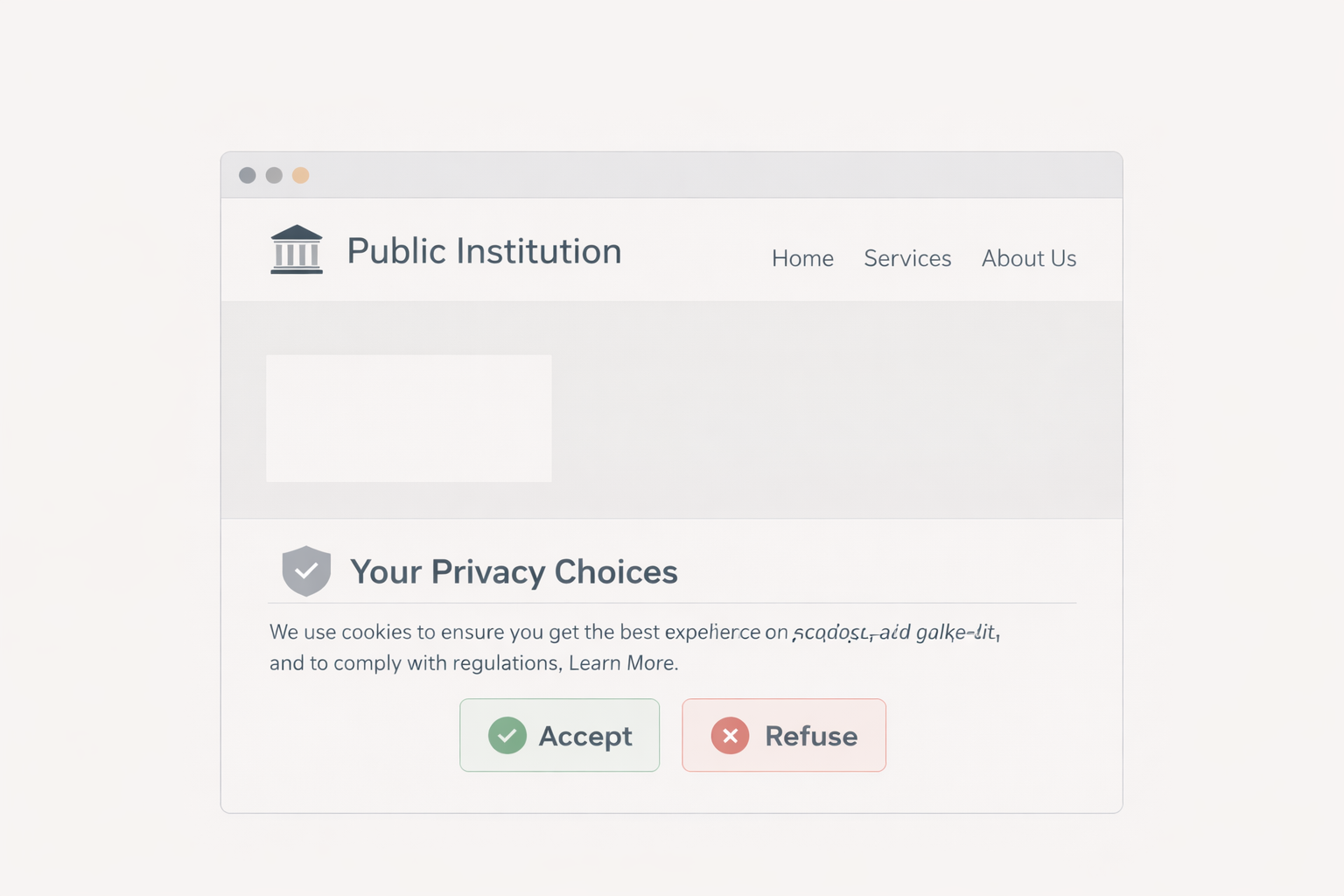
With tarteaucitron, this has always been taken seriously. The banner and management panel are designed to be keyboard-navigable, readable, and understandable.
This work is largely driven by the open-source community. Several contributors with accessibility expertise have helped reach a level well beyond the bare minimum.
Very concrete budget constraints
Public organizations operate with limited budgets and long decision cycles. The cost of a CMP is never trivial.
A model without limits on the number of sites or traffic is easier to understand and avoids constant renegotiation.
This point often comes up alongside the need to clearly understand what the tool actually does, as explained in what a CMP really is, technically.
Operational simplicity
In local authorities, implementation must remain pragmatic. There is not always a dedicated team focused on consent management.
A simple, well-documented tool with predictable behavior is often preferred over a more complex but opaque solution.
This is why loading order and technical constraints are explicitly documented, as described in how service loading works.
Generally smooth relationships
Unlike some private-sector practices, exchanges with public institutions are often straightforward, with little unnecessary process.
Billing mechanisms and the absence of constant negotiations help keep things simple once the solution is validated.
A constrained but assumed choice
In many cases, tarteaucitron is chosen out of constraint: budget, sovereignty, accessibility requirements.
But this choice often becomes an assumed one once teams understand the project’s clear boundaries, as explained in what tarteaucitron will never do.
In this context, simplicity and stability matter far more than secondary features.