
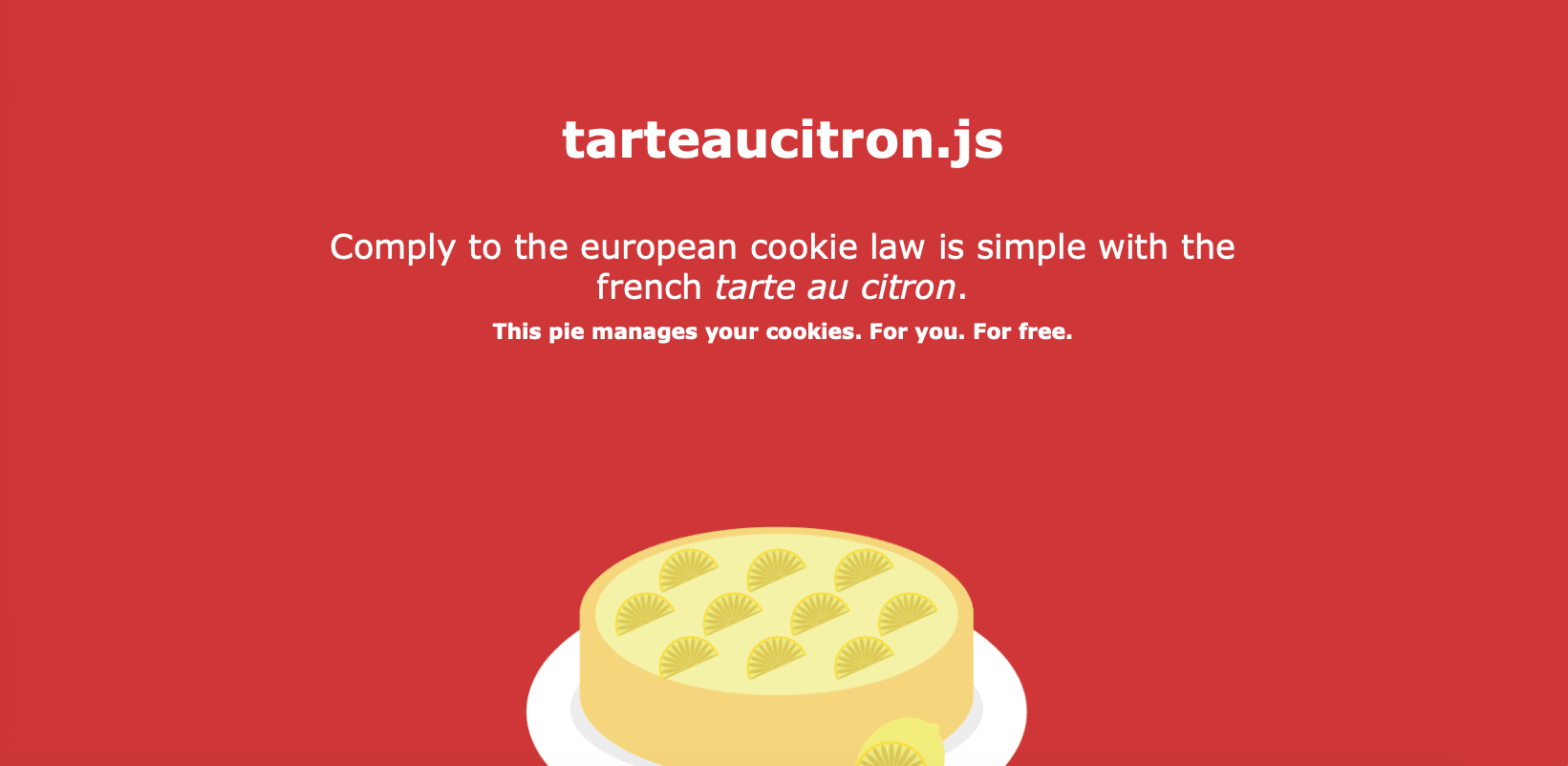
The context in 2014
The first commit of tarteaucitron dates back to September 14, 2014. At that time, cookie regulations were starting to emerge, with little technical guidance. I was running several blogs and an audience measurement tool. The goal was simple: comply with the law.
There were no CMPs as we know them today. The topic attracted little interest, and cookie compliance was often seen as something that could be postponed.
A very concrete need
I wanted a clean, technically sound solution, without relying on third-party services. The idea was not to optimize anything, but simply to comply with existing regulations.
At the beginning, tarteaucitron was not a product, but a direct response to a personal need.
A personal project first
Initially, tarteaucitron was a JavaScript script published on GitHub without any specific ambition. It was neither a product nor a business project. Just a solution for my own websites, shared publicly because it could be useful to others.
For a long time, the project remained personal. There was no real market. The free version started to spread simply because it was open, easy to integrate, and came with no strings attached.
Obvious technical choices
Choosing JavaScript was natural. A CMP operates in the browser. It must block, delay, or condition the loading of scripts.
- no server-side dependency
- no unnecessary layers
- full control in the browser
No other language made sense in this context. This is still true today.
A pragmatic approach
From the start, the list of supported services has been maintained as a file. No complex abstraction, no automatic generation. Just a readable list, maintained manually, and updated over time.
A project that grew beyond its initial scope
I never imagined that tarteaucitron would become one of the most widely used CMPs in France. I was not trying to “build a CMP”. I was solving a specific problem.
- a simple solution
- accessible
- respectful of accessibility standards
- free to use
This mindset has not changed. The open-source version remains fully usable without restrictions. The professional version exists to simplify certain use cases, not to lock compliance behind a paywall.
Allowing thousands of websites to comply for free is still a core part of the project 🙂